
Industrial interior design
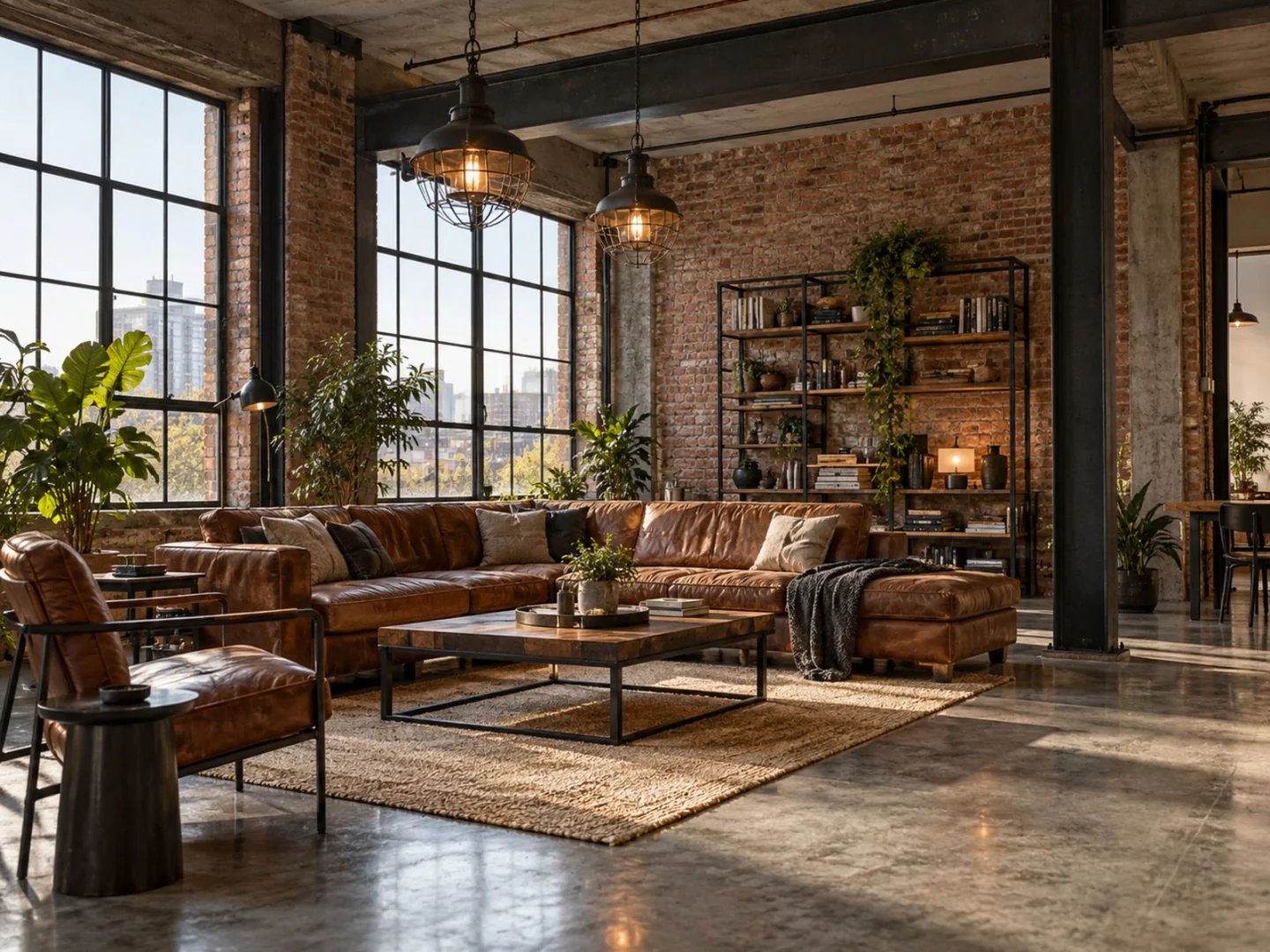
Industrial interiors celebrate what is usually hidden — brick, concrete, steel and visible pipes. Leather and reclaimed wood bring warmth to the tough materials.
Key elements
- Materials
- Exposed brick, concrete, black steel and reclaimed wood
- Colors
- Charcoal, rust, tan leather and off-white
- Furniture
- Metal-framed shelving, leather sofas, factory-style stools
- Lighting
- Cage pendants and exposed-filament bulbs
- Decor
- Vintage signs, large windows kept bare, oversized clocks
Color palettes that work
- Charcoal Black#1A1A1A · #2D2D2D · #404040 · #525252 · #666666
- Mocha Coffee#3E2723 · #4E342E · #5D4037 · #6D4C41 · #795548
- Autumn Harvest#8B4513 · #CD853F · #DEB887 · #D2691E · #A0522D
Where the style comes from
The industrial look began in cities like New York and London in the second half of the twentieth century, when artists and later residents converted old warehouses, factories and mills into lofts. Instead of covering the building's past, they left brick walls, concrete floors, steel beams and ductwork exposed. High ceilings and huge windows made the spaces dramatic, and furniture was often salvaged from workshops or offices. The idea is authenticity: let the structure and materials show their history and wear. Today the style is applied well beyond lofts, but it still works best when it responds to something real in the building, such as a beam, a concrete column or a factory-style window.
How to recognize it and get it right
Typical signs are exposed brick or concrete, black metal window frames, open shelving on steel brackets, visible pipes or cable trays, and furniture that mixes reclaimed wood with metal. Leather seating, vintage task lamps and large open spaces complete the picture. In a regular apartment, choose one or two genuine industrial elements instead of faking everything: a brick-effect feature wall, a black steel and glass partition, or polished concrete flooring. Then add worn leather, wool and wood to soften it. Keep the color palette dark but not gloomy by placing warm lamps around the room and leaving windows as uncovered as privacy allows.
Common mistakes
- Making the whole room hard and dark. Too much steel, concrete and black paint feels cold; balance with a large rug, curtains and warm lighting.
- Using obvious imitation materials, such as printed brick wallpaper with repeating patterns. One real material, even on a small area, looks far more convincing.
- Ignoring acoustics. Hard surfaces bounce sound, so lofts can feel loud; textiles, books on open shelves and upholstered seating help absorb echo.
Styles it pairs with
Industrial pairs well with mid-century, whose walnut pieces and curved chairs soften raw materials. Modern furniture keeps it sleek, while a few bohemian textiles and plants make it more relaxed. Farmhouse also mixes easily, since both share reclaimed wood; the result is often described as rustic industrial and works well in kitchens and dining rooms.
Questions
How do I get an industrial look in a new-build apartment?
Focus on a few convincing materials rather than imitating a factory. Try a black steel framed glass partition, open metal shelving, a concrete-look floor or worktop, and cage or enamel pendants. Leather and reclaimed wood then supply the character the architecture lacks.
What colors go with exposed brick?
Brick already brings warm red and orange tones, so pair it with neutrals: off-white, charcoal, warm gray and black. Deep green or navy also work as accents. Avoid strong reds or oranges that compete with the brick itself.
Industrial in other rooms
See it in your own space
Upload a photo and get a photorealistic redesign in under a minute. 3 free designs when you sign up.
Try it on my photo