
Modern interior design
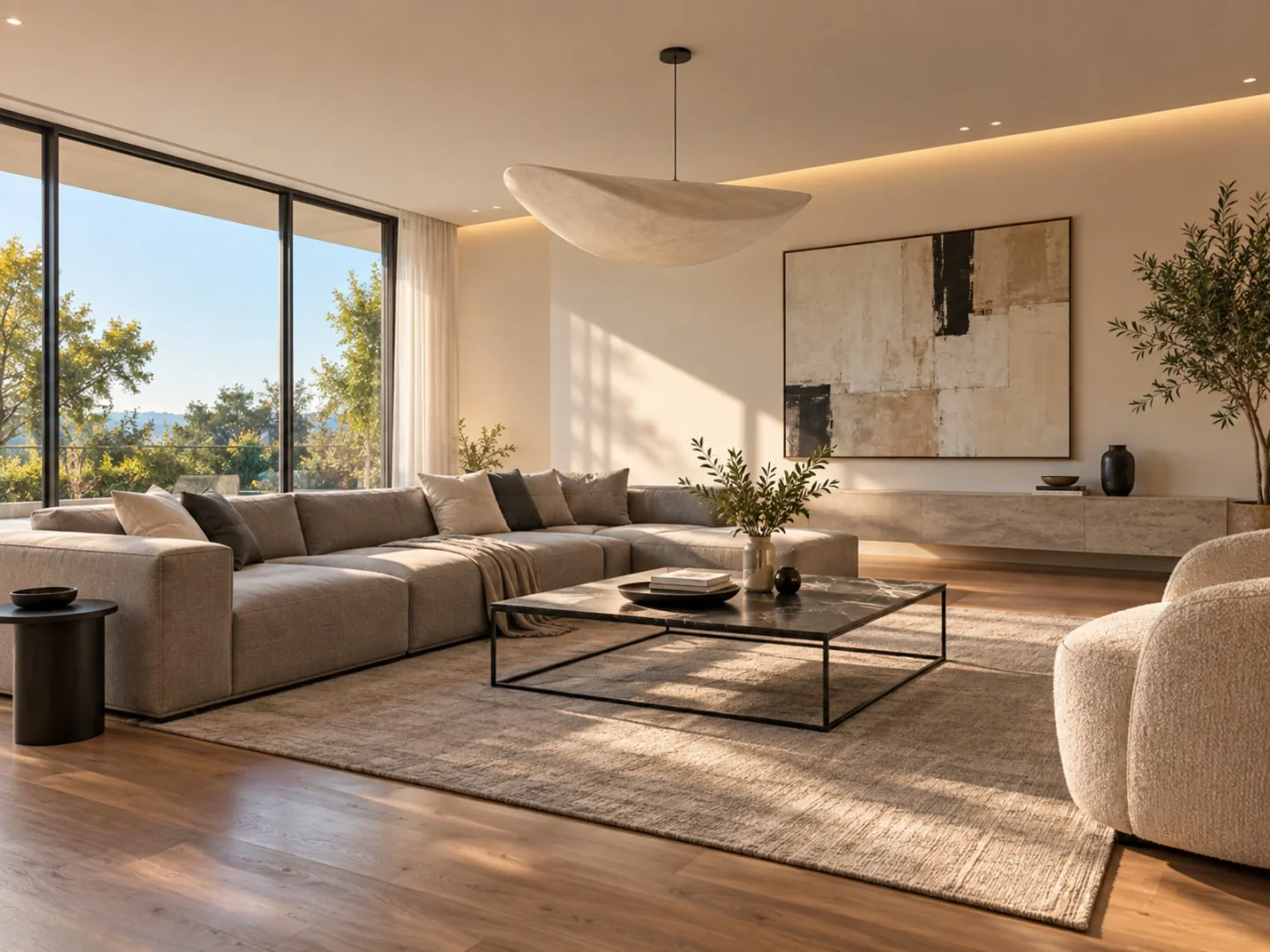
Modern interiors are about clarity: simple shapes, a restrained palette and furniture that earns its place. Ornament is replaced by good proportions, texture and light.
Key elements
- Materials
- Smooth plaster, glass, lacquered wood and brushed metal
- Colors
- White, warm gray and black with one muted accent
- Furniture
- Low, linear sofas and slim-legged tables
- Lighting
- Recessed lights plus one sculptural pendant
- Decor
- Few, large pieces — one artwork rather than a gallery wall
Color palettes that work
- Millennial Gray#F5F5F5 · #D3D3D3 · #A9A9A9 · #696969 · #404040
- Charcoal Black#1A1A1A · #2D2D2D · #404040 · #525252 · #666666
- Cool Neutrals#F0F4F8 · #D9E2EC · #BCCCDC · #9FB3C8 · #829AB1
Where the style comes from
Modern design grew out of the early twentieth century, when architects and furniture makers rejected heavy Victorian ornament in favor of honest materials and forms shaped by their use. Schools such as the Bauhaus taught that a chair, a lamp or a staircase should look like what it does, and new industrial materials like tubular steel, plate glass and plywood made that possible. Open floor plans, big windows and flat surfaces followed. At home, modern is less a fixed era than an attitude: remove what is decorative for its own sake, let structure and proportion carry the room, and give daylight the leading role. That is why a modern interior can feel calm even when it is furnished generously.
How to recognize it and get it right
You can spot a modern room by its horizontal lines, raised furniture with visible legs, and surfaces without carving or fringe. Hardware is minimal or hidden, window treatments are simple roller blinds or straight panels, and the palette stays mostly neutral with contrast coming from black accents or a single strong color. To get it right in a real home, start by editing: clear the walls, remove small decorative objects and keep only pieces with a clear purpose. Then choose a sofa and table with the same leg style so the room reads as one composition. Keep window frames and skirting boards crisp and freshly painted, because in a pared-down scheme small flaws become visible.
Common mistakes
- Choosing only cold surfaces such as glass, chrome and white gloss. Without wood, wool or linen the room feels like a showroom rather than a home.
- Buying furniture that is too small for the space. Modern rooms depend on fewer, well-scaled pieces, so a tiny sofa floating in a big room looks unfinished.
- Relying on a single overhead fixture. Flat, central light flattens clean architecture; add wall washers or floor lamps to create depth and evening mood.
Styles it pairs with
Modern mixes easily with mid-century, which shares its clean lines but adds warm walnut and a few curves. It also works with industrial when you want more texture: keep the modern layout and add one brick wall or black steel shelving. For a softer result, borrow Scandinavian textiles and light oak while keeping the restrained modern palette.
Questions
What is the difference between modern and contemporary interior design?
Modern refers to a specific design movement from the early and mid twentieth century, with fixed principles like function first and no ornament. Contemporary simply means what is current today, so it changes over time and currently embraces curves, plush fabrics and mixed metals.
Can a modern living room feel cozy?
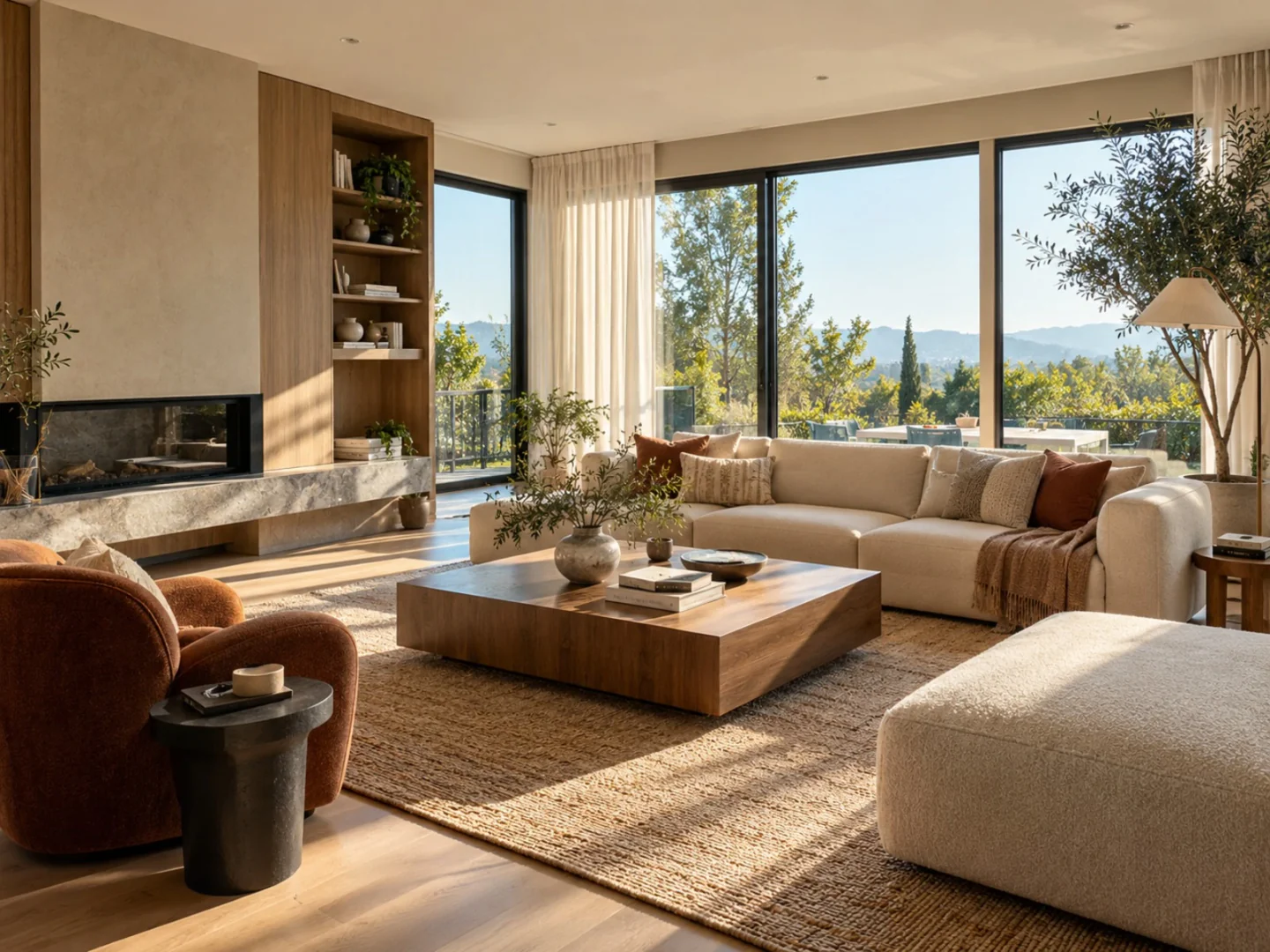
Yes. Keep the clean layout but layer in warmth through textures: a thick wool rug, linen curtains, a wood coffee table and warm white lamps at different heights. Coziness comes from materials and light, not from adding more objects.
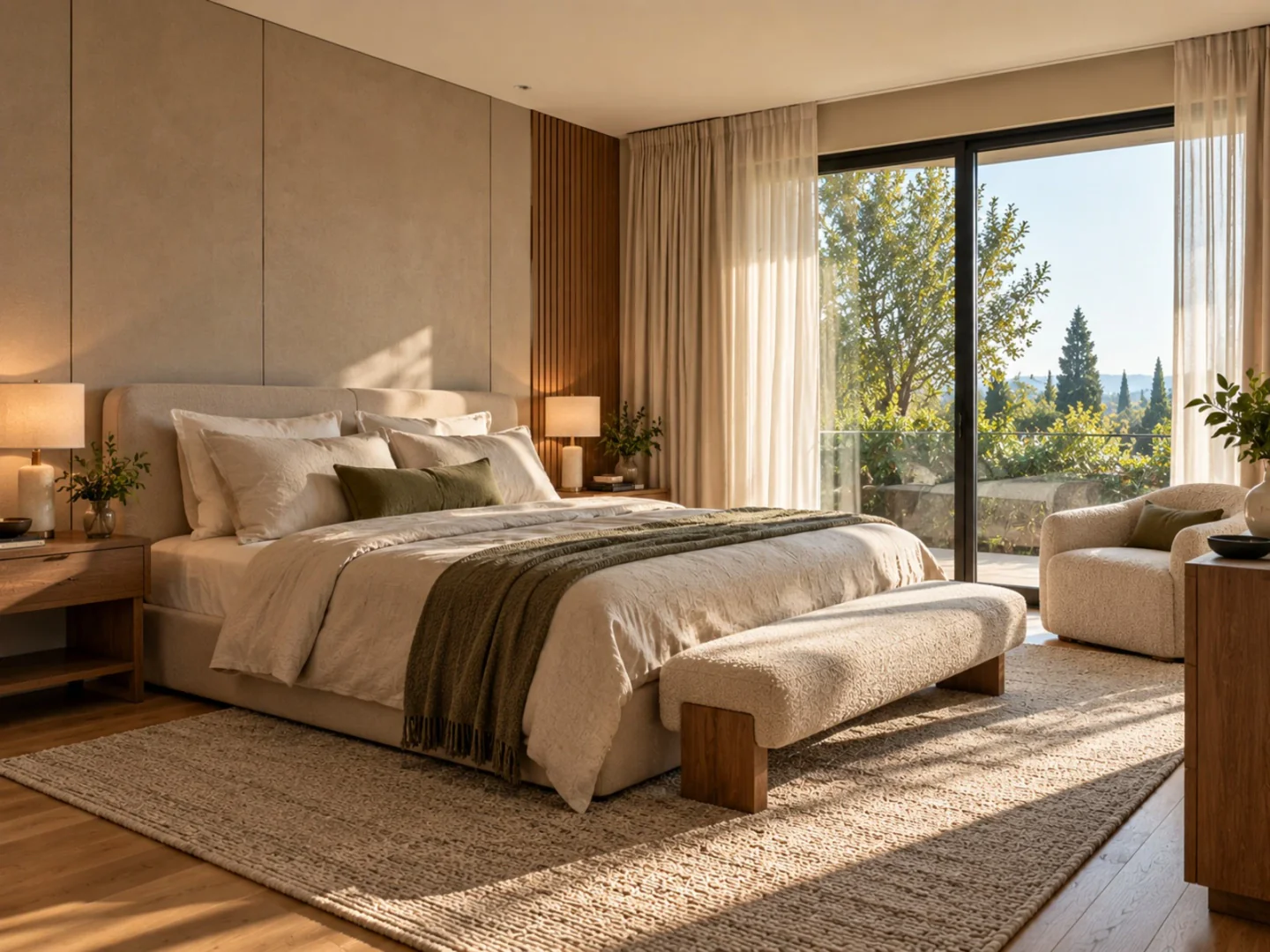
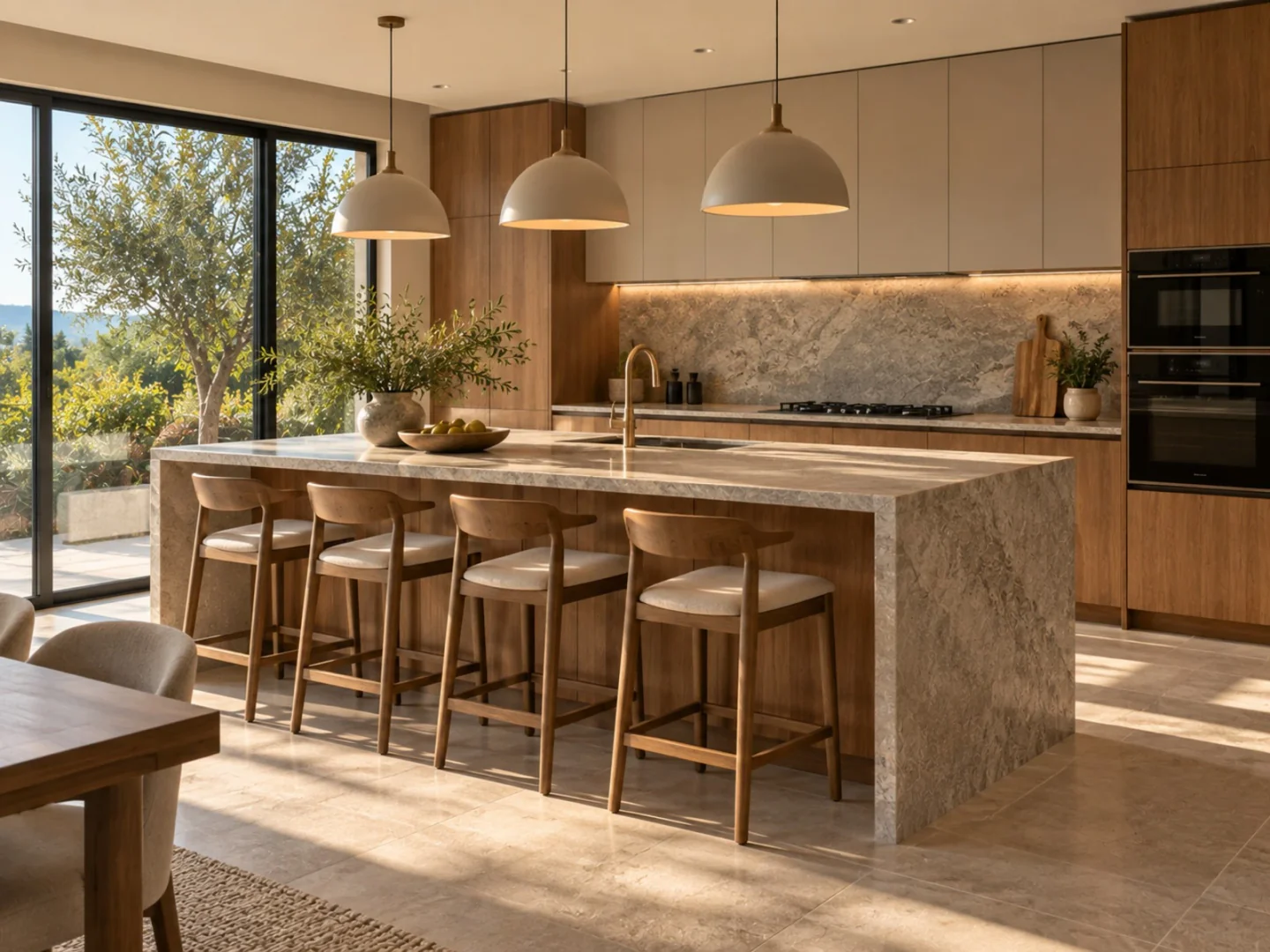
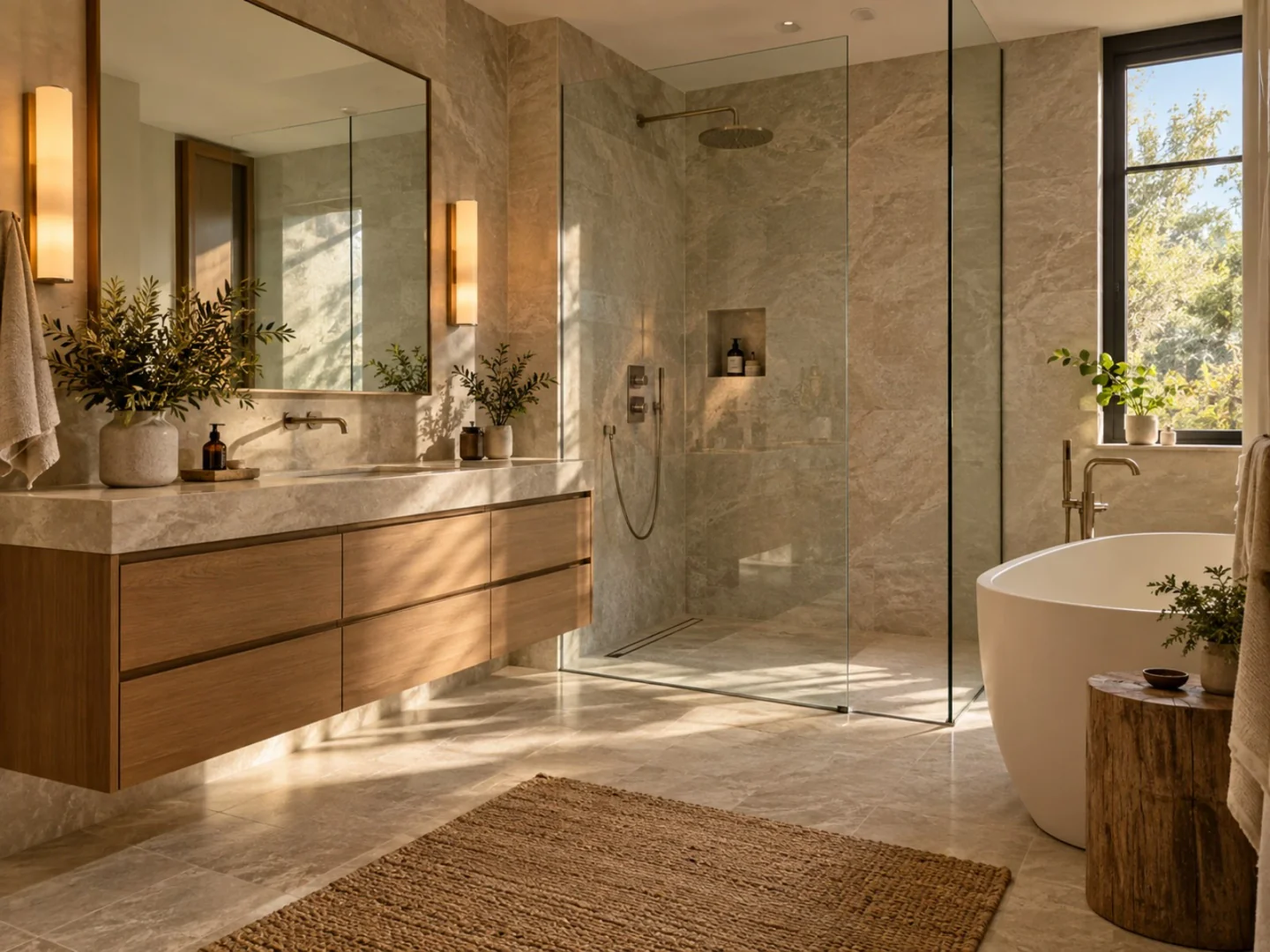
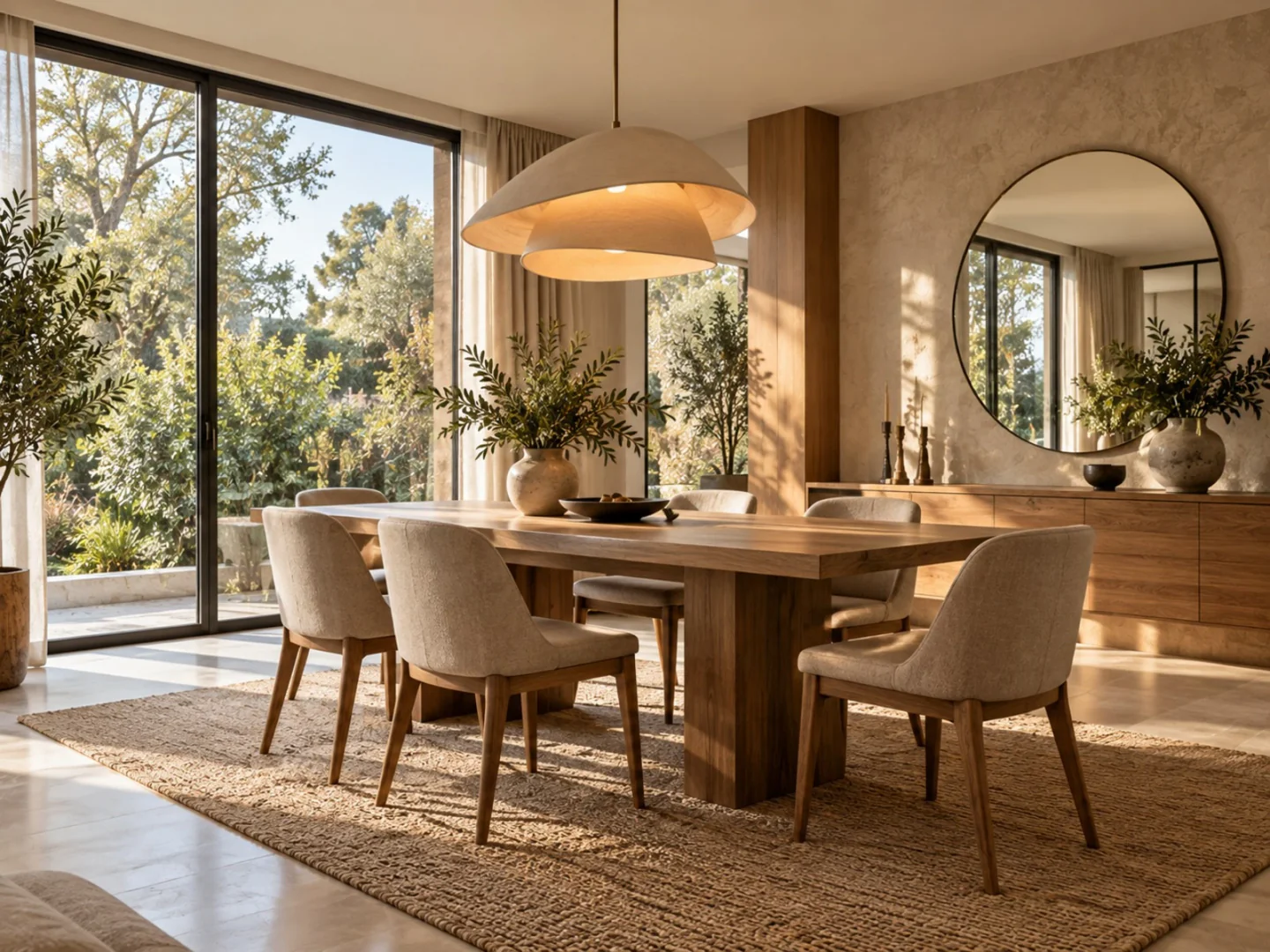
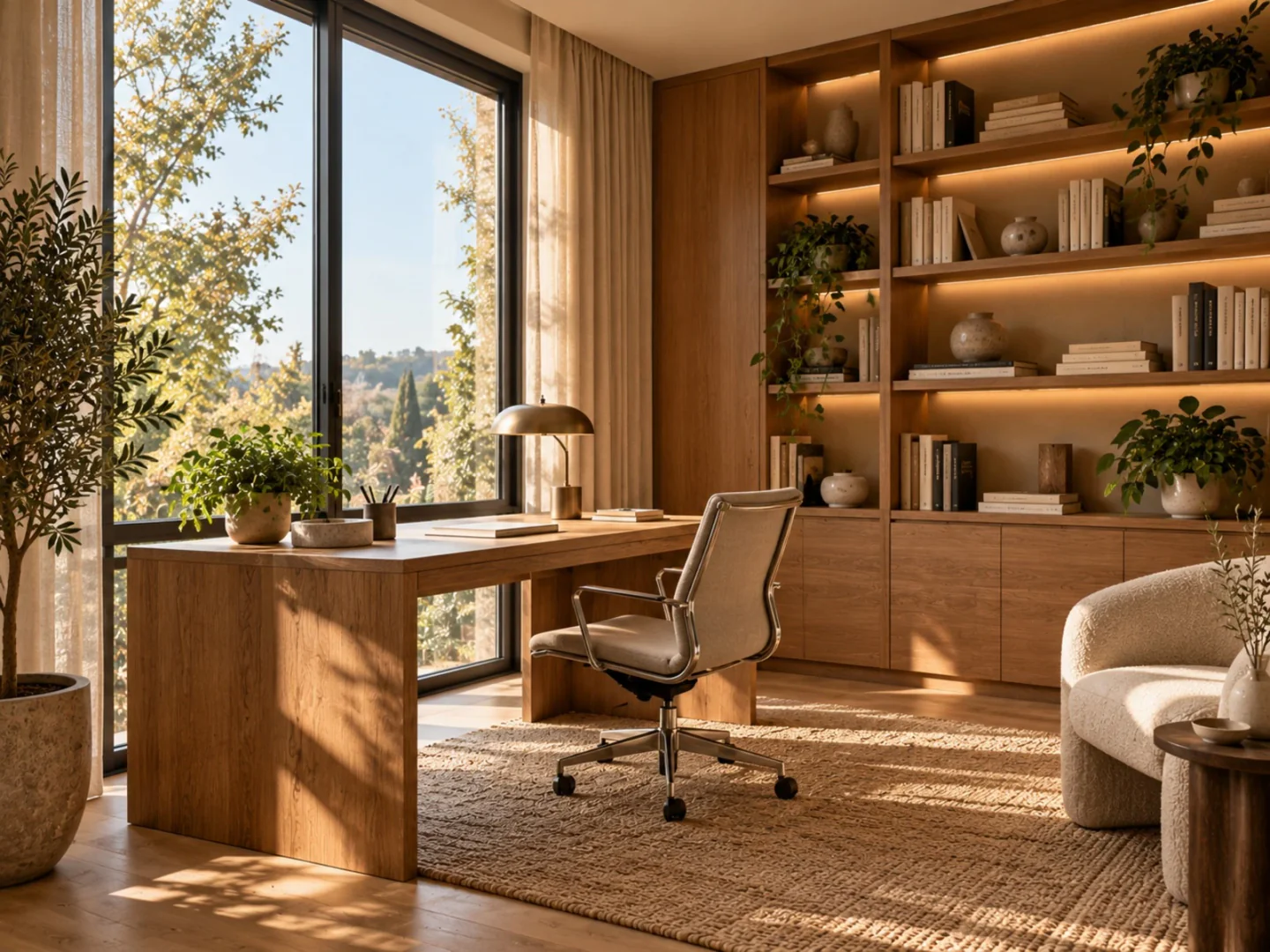
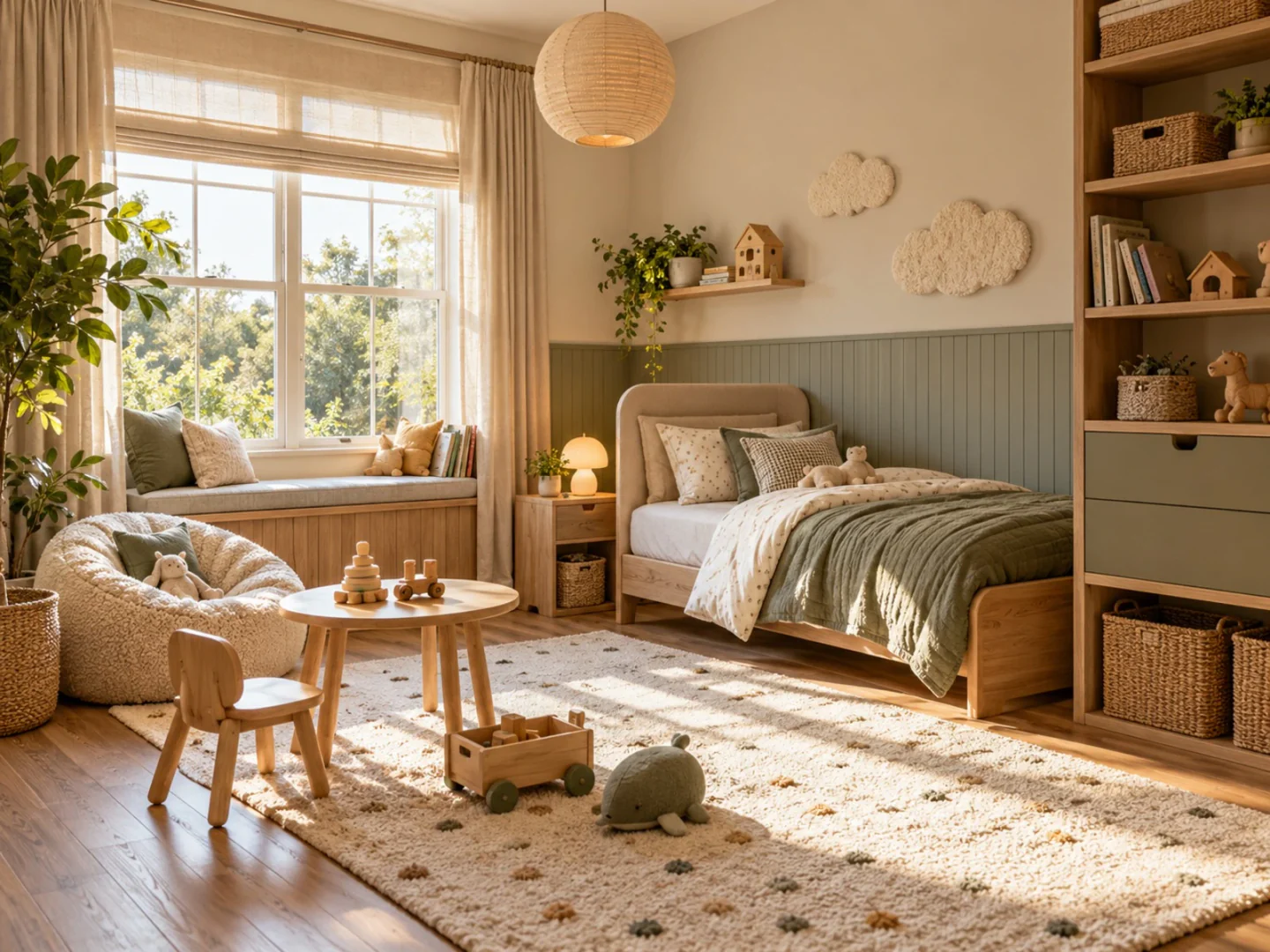
Modern in other rooms
See it in your own space
Upload a photo and get a photorealistic redesign in under a minute. 3 free designs when you sign up.
Try it on my photo