How to Choose Flooring: Materials Compared Room by Room
How to choose flooring: hardwood, laminate, vinyl, tile, stone, concrete and carpet compared, with room-by-room advice, transitions and a floor visualizer.
By Alperen Ciftlikci6 min read
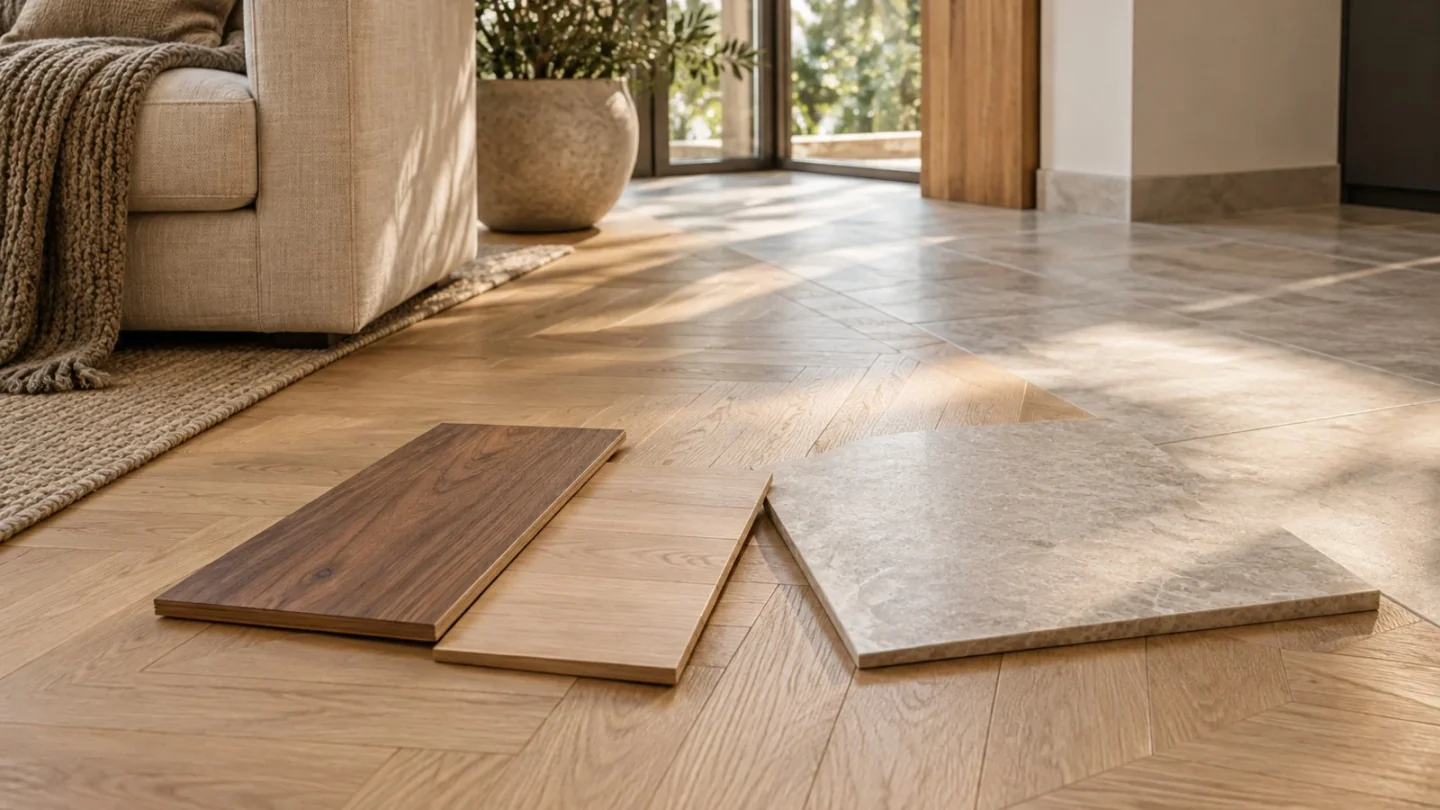
Flooring is one of the biggest visual surfaces in a home and one of the hardest to change later. It has to look right, survive daily life, suit each room's moisture and traffic, and work with the rooms next to it. If you want to choose flooring without regrets, compare materials on a few practical criteria, decide room by room, plan the transitions, and preview the result on a photo before ordering. This guide covers all four.
The questions to ask before comparing materials
Every floor is a trade-off. Before you look at samples, answer these:
- How much water will it see? Bathrooms, kitchens, entryways and laundry rooms need materials that tolerate spills or standing water.
- How much traffic and wear? Hallways, kitchens and homes with pets or kids need scratch- and dent-resistant surfaces.
- How should it feel underfoot? Warmth, softness and noise matter in bedrooms and living rooms, and in apartments with neighbors below.
- How much care are you willing to give? Some floors need sealing, oiling or refinishing; others only need sweeping and mopping.
- What is underneath? The subfloor, underfloor heating and the height you can add all limit your options. Building rules on sound insulation may apply in apartments.
Flooring materials compared
Here is how the main materials compare. Quality varies a lot within each category, so treat this as a general guide and check the specific product's ratings for water, wear and underfloor heating.
| Material | Durability | Water resistance | Comfort | Maintenance | Where it fits |
|---|---|---|---|---|---|
| Solid hardwood | Good; can scratch and dent, can be sanded several times | Low | Warm, natural feel | Regular cleaning, periodic refinishing | Living rooms, bedrooms, dining rooms |
| Engineered wood | Good; real wood top layer, refinish options depend on its thickness | Low to moderate | Warm, natural feel | Like hardwood | Living areas, also over underfloor heating where rated |
| Laminate | Good scratch resistance | Low to moderate, depends on product | Firm, can sound hollow without good underlay | Easy | Living rooms, bedrooms, hallways on a budget |
| Vinyl (sheet, plank or tile) | Good; softer surface can dent | High | Softer and warmer than tile | Easy | Kitchens, bathrooms, basements, rentals |
| Ceramic or porcelain tile | Very high | Very high | Hard and cool | Easy; grout needs attention | Bathrooms, kitchens, entryways, warm climates |
| Natural stone | Very high, varies by stone | High when sealed | Hard and cool | Needs sealing; some stones etch or stain | Entryways, bathrooms, statement living areas |
| Terrazzo | Very high | High when sealed | Hard and cool | Low, periodic sealing | Kitchens, hallways, open-plan spaces |
| Polished concrete | Very high | Moderate to high when sealed | Hard; can feel cold | Low; resealing over time | Open-plan, industrial and modern interiors |
| Carpet | Moderate; shows wear in paths | Low | Very soft, warm and quiet | Frequent vacuuming, deep cleaning | Bedrooms, kids' rooms, quiet spaces |
A few notes the table cannot show: herringbone and chevron patterns add character to wood and wood-look floors but take longer to lay and create more offcuts. Large-format tiles and wide planks make rooms feel calmer and larger. Darker floors hide some dirt but show dust and scratches; very pale floors show dirt but hide dust.
Room-by-room advice
- Living room: wood, engineered wood or a good laminate for warmth; add a rug for softness and acoustics. Concrete or terrazzo suit modern and industrial schemes.
- Kitchen: tile, vinyl, terrazzo or sealed stone handle spills best. If you want wood, choose a product rated for kitchens and wipe spills quickly.
- Bathroom: porcelain tile or vinyl. Choose a slip-resistant finish, and avoid solid wood.
- Bedroom: wood, laminate or carpet — comfort and quiet matter more than toughness here.
- Kids' room: vinyl or laminate with a washable rug is practical; carpet is soft for play but harder to keep clean.
- Hallway and entryway: the hardest-working floors. Tile, stone or a durable vinyl, plus a doormat inside and out.
- Basement: materials that tolerate moisture, such as vinyl or tile; check for damp first.
Plan transitions between rooms
How floors meet matters as much as the floors themselves. In open-plan spaces, one continuous material usually looks calmest and makes the area feel bigger. Where you need different materials — a tiled kitchen next to a wood living room, for example — put the change at a natural line, such as a doorway, the edge of a kitchen island or a step.
Keep the number of different floors low; two or three across a home is usually plenty. Make sure finished heights match or plan a proper threshold strip, because small level changes are a trip hazard. When colors change, choose floors with a shared undertone, such as a warm oak next to a warm beige tile, so the transition looks deliberate.
Preview your floor before you order
Small samples on a showroom board are hard to imagine across a whole room. The floor visualizer lets you upload a photo of your room and swap the floor for one of 34 materials — hardwood, herringbone and chevron, laminate, tile, marble, terrazzo, stone, concrete, carpet and vinyl — while your walls and furniture stay the same.
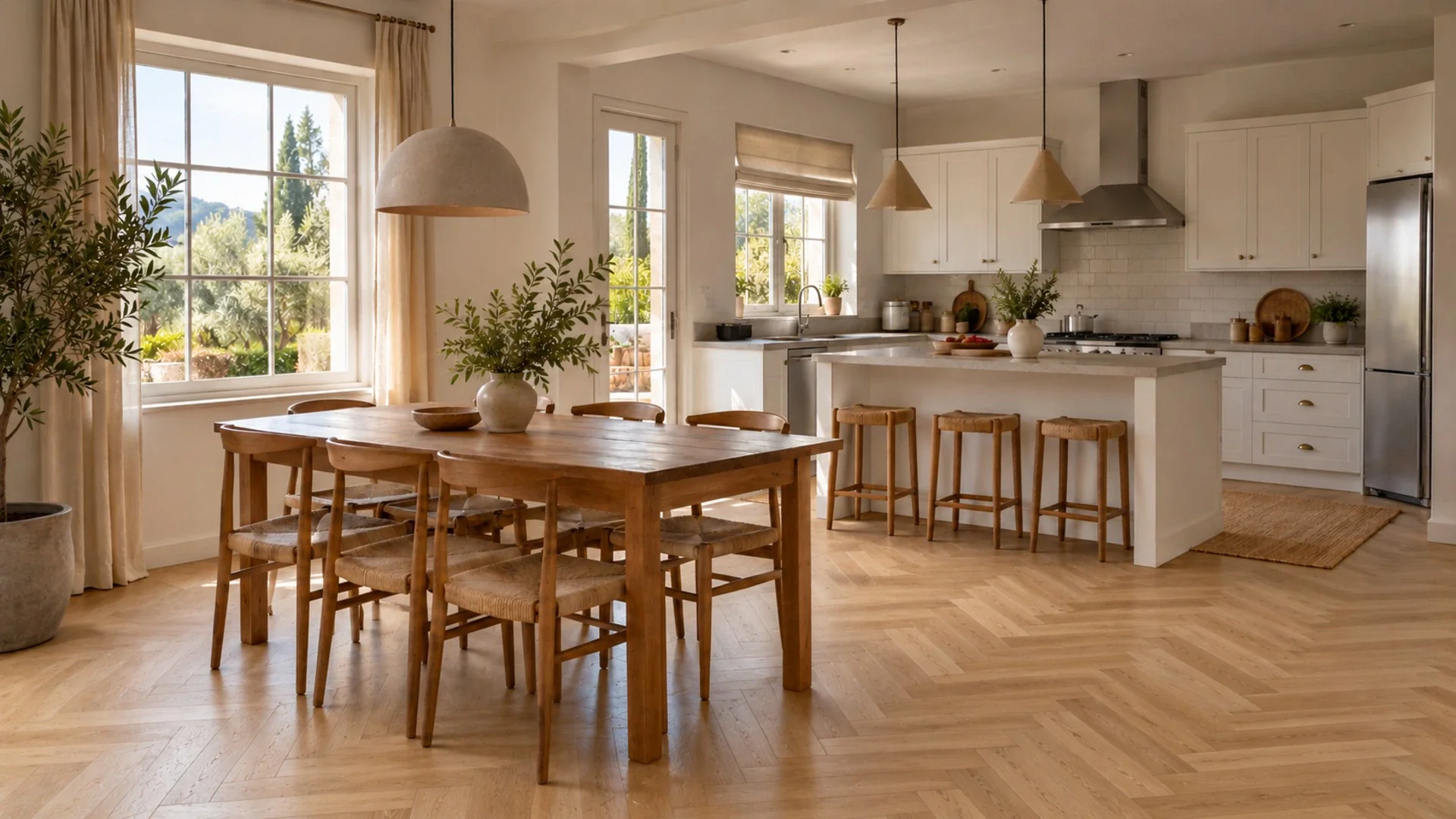
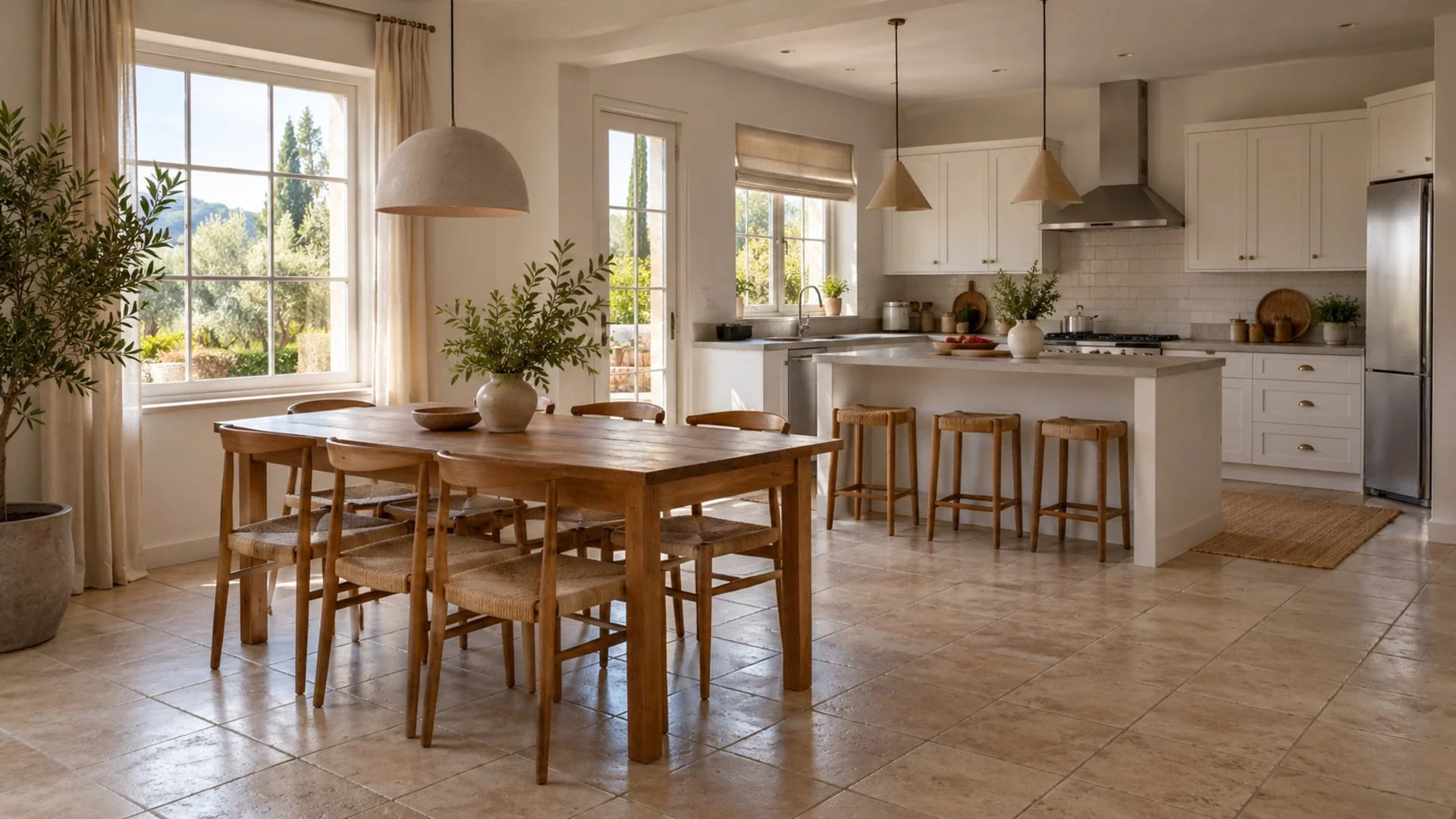
Try two or three finalists and look at them with your own wall color, light and furniture. If you are changing more than the floor, the AI interior design tool can redesign the whole room in a chosen style, and the wall color visualizer helps you match paint to the new floor. Each image uses one credit, and new accounts get free credits.
The images are concepts, so always bring home real samples, check them in daylight and at night, and ask your installer about the subfloor, moisture and expansion gaps.
FAQ
What is the most durable flooring for a busy home?
Porcelain tile, natural stone, terrazzo and sealed concrete are among the hardest-wearing options. For a warmer feel, good laminate and vinyl resist scratches and spills well. Check each product's wear and water ratings, as quality varies within every category.
What flooring works best in kitchens and bathrooms?
Water-resistant materials such as porcelain or ceramic tile, vinyl, terrazzo and sealed stone. In bathrooms, choose a slip-resistant finish. Solid hardwood is best avoided in wet areas.
Should I use the same flooring throughout the house?
Using one material in connected spaces makes a home feel calmer and larger. Where you need a change, such as between a kitchen and living room, place it at a doorway or natural line and choose floors with a similar undertone.
Can I see a new floor in my room before buying it?
Yes. A floor visualizer shows a chosen material on a photo of your own room while walls and furniture stay the same. The result is a concept, so confirm your choice with real samples in your home's light.